Is the leadership team unsure which values actually guide decisions rather than decorate the website? Many founders sense that values matter but lack a repeatable method to define, validate and operationalize them so they shape hiring, product trade-offs and investor conversations.
This guide delivers a practical, evidence-based Values Framework for Startup Founders that converts beliefs into measurable behaviors. The framework includes a step-by-step playbook, hiring checklists, conflict-resolution scripts, workshop cost benchmarks and KPIs to track cultural adherence across startup stages.
Key takeaways: what to know in 1 minute
- Define values as behaviors, not slogans. Translate each value into two observable behaviors and one hiring question.
- Use a repeatable five-step framework. Diagnose → align → prioritize → operationalize → measure.
- Embed values in hiring and performance. Use a values checklist and scorecards during interview loops and reviews.
- Resolve trade-offs with a value-prioritization matrix. When values collide, use the matrix plus stakeholder weighting to decide.
- Budget workshops realistically. Typical values workshop costs range from $2k (internal) to $20k+ (facilitator-led, multi-day) depending on scope.
Step-by-step values framework for founders
Step 1: diagnose current behavior and perception
Start with evidence. Collect three data sources: employee pulse survey, founder documented decisions from the last 12 months, and customer-facing communications. Use a short pulse (10 items) to measure perceived alignment. Combine qualitative notes from founders about decisions that felt "values-led" and counterexamples where values were ignored.
Step 2: synthesize patterns into candidate values
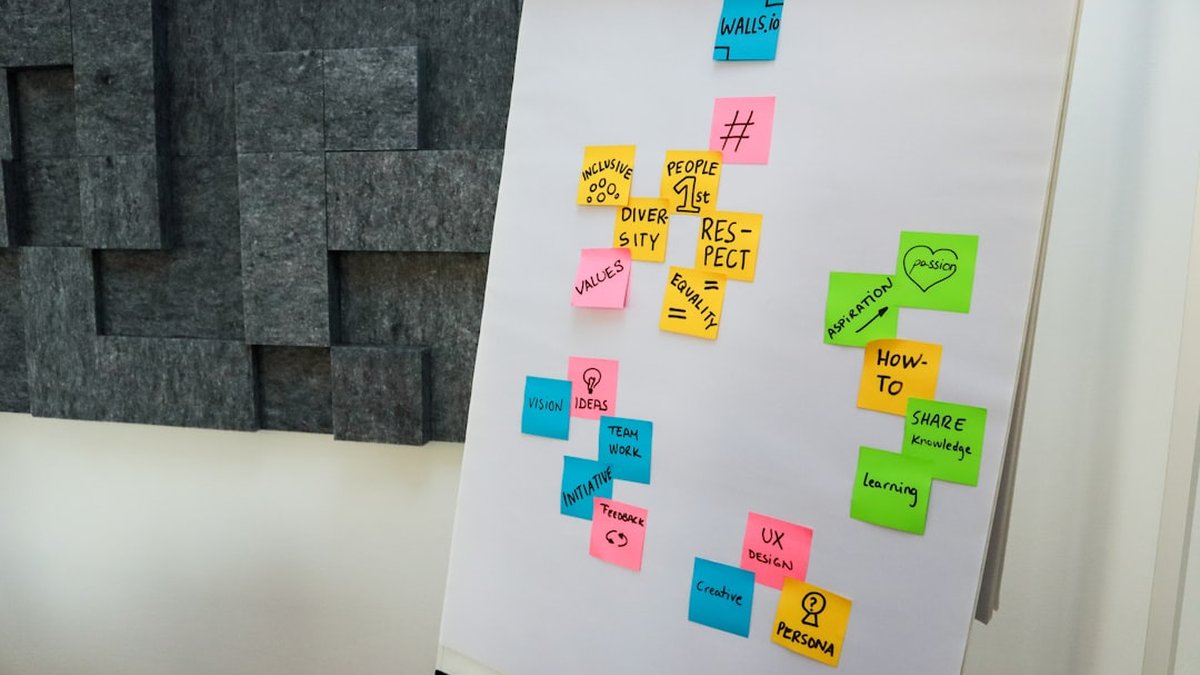
Cluster the evidence with simple affinity mapping. Convert clusters into candidate value statements expressed as behavior prompts (e.g., instead of “innovation,” write “propose two viable alternatives before approving a roadmap item”). Limit to 10–12 candidates initially.
Step 3: prioritize top 3–5 founding values
Use weighted criteria: strategic impact (40%), hiring signal (30%), operational clarity (20%), and longevity (10%). Score each candidate 1–5 and compute weighted totals. Keep a primary set of 3–5 values for day-to-day decisions and an expanded list for cultural nuance.
Step 4: operationalize language and artifacts
Turn each prioritized value into three artifacts: a one-line behavior definition, two concrete interview questions, and a performance rubric (measurable indicators for levels of proficiency). Create ready-to-use templates for job descriptions, onboarding, and performance reviews.
Step 5: measure, iterate and scale
Track adherence via quarterly pulse surveys, values-based interview scores, and a cultural NPS for new hires (first 90 days). Host a biannual review to update values when strategic pivots or scaling inflection points occur.
Values framework in five steps
🔍 Step 1 → Diagnose (surveys, decision audit)
✂️ Step 2 → Synthesize (affinity mapping)
🎯 Step 3 → Prioritize (weighted scoring)
🛠️ Step 4 → Operationalize (scripts, rubrics)
📈 Step 5 → Measure & iterate (OKRs, pulse)
Core company values checklist for hiring
Pre-interview: align role and value signals
- Add 1–2 value indicators to the job description.
- Include a sentence explaining why these values matter for this role.
- Prepare the interview panel with the values rubric.
Interview loop: observable-behavior questions
- Use behavior-based questions mapped to the rubric. Example: for “customer empathy,” ask: “Tell about a time a customer was rightfully upset, what was done and why?”
- Assign a values score separate from technical score (0–4 scale).
Offer and onboarding: checklists and acceptance signals
- Add a values alignment item to the offer packet and first 90-day plan.
- Assign a buddy to model values and collect anecdotal evidence for the first 30 days.
Post-hire: performance and calibration
- Use monthly calibration meetings in the first 6 months with a values scorecard.
- Tie one probation objective to a values-based measurable behavior.
| Hiring step |
Value-focused action |
Success signal |
| Role design |
Embed 1–2 values in JD |
Higher role clarity in applicants |
| Interview |
Use behavior questions + rubric |
Consistent panel scores |
| Offer |
Values acceptance discussion |
Candidate references mention culture |
| Onboarding |
90-day values milestones |
New hire pulse score ≥ 8/10 |
Simple guide to discover founder values
Exercise 1: decision audit (30–90 minutes)
Gather the last 10 strategic decisions (product, hires, pricing, partnerships). For each, document the rationale and who had final say. Tag each decision with candidate values that best explain why it was made.
Exercise 2: legacy question (15 minutes)
Ask: “When investors, customers and team remember the company in 10 years, what three cultural things should they say?” Write answers independently, then compare and extract overlaps.
Exercise 3: card sort with the leadership team (60 minutes)
Prepare 20 value cards (examples: clarity, ownership, humility, speed). Have leaders sort into: essential, aspirational, not core. Use results to seed the weighted prioritization.
Exercise 4: validate with customers and early hires
Run a short qualitative interview with 6–12 customers and early hires asking what behaviors stood out about the team. Correlate external perception with internal claims.
What to do when values conflict
Common conflict types
- Growth vs. quality (scale fast or prioritize reliability)
- Transparency vs. confidentiality (share details or protect strategic info)
- Speed vs. consensus (ship quickly or achieve alignment)
Practical resolution process
- Re-state both values in behavioral terms.
- Map the specific decision to short-term and long-term impact scores (1–5).
- Apply the founder weighting: some values may be primary in a given stage (e.g., speed during MVP). Document the decision and winning rationale.
Example case
A product team wants to ship an unfinished integration to meet a business development deadline (speed) while engineering pushes for delayed release to avoid outages (quality). Apply this process: estimate impact (customer churn risk 4/5, revenue opportunity 3/5), evaluate rollback costs, choose a mitigated path (soft launch to 10% with feature flags). Record this as a precedent and add a clause to the product handbook.
How much does a values workshop cost
Cost drivers
- Facilitator experience and location.
- Length (half-day vs. multi-day).
- Pre-work research (surveys, decision audits).
- Deliverables (playbooks, templates, recorded sessions).
Typical ranges (USD)
- Internal-led, no external facilitator: $0–$2,000 (internal time + materials).
- Independent facilitator or boutique consultant, half-day: $2,000–$6,000.
- External facilitator, full day + pre-work + deliverables: $6,000–$15,000.
- Multi-day facilitated program with leadership coaching and templates: $15,000–$40,000+.
Sample budget breakdown
- Facilitator fee: 40–60% of total.
- Pre-work analysis: 15–25%.
- Deliverables and templates: 10–20%.
- Logistics (venue, food): 5–15%.
| Package |
Typical cost |
What it includes |
| DIY internal session |
$0–$2,000 |
Templates, facilitator internal time |
| Facilitator half-day |
$2,000–$6,000 |
Pre-survey, half-day workshop, one deliverable |
| Facilitator full-day |
$6,000–$15,000 |
Pre-work, full day, playbook, recording |
| Multi-day program |
$15,000+ |
Coaching, templates, role-based modules |
How to measure adherence: KPIs and scorecards
Quantitative metrics
- Values interview score average per hire (panel mean).
- New hire cultural NPS at 90 days.
- Pulse survey alignment score (% who agree values reflected in decisions).
- Values-driven attrition (voluntary exits citing misalignment).
Qualitative metrics
- Number of recorded decisions referencing values in the decision log.
- Customer anecdotes tying support or advocacy to team behavior.
- Manager narratives during performance calibration.
Example dashboard (quarterly)
- New hire values score: target ≥ 3.5/4
- Pulse alignment: target ≥ 80%
- Decision log references: baseline > 8 per quarter
- Cultural NPS: target ≥ +30
Advantages, risks and common mistakes
✅ Benefits / when to apply
- Builds consistent hiring signals and reduces onboarding friction.
- Informs prioritization during product-market fit and scaling.
- Improves retention when values align with daily incentives.
⚠️ Errors to avoid / risks
- Defining aspirational phrases instead of observable behaviors.
- Creating too many values; a long list dilutes practice.
- Treating values as marketing copy rather than decision rules.
Practical templates and scripts (ready to copy)
Values interview question template
- Value: Ownership
- Question: "Describe a time a project missed a deadline. What steps were taken to own the outcome?"
- Scoring rubric: 0 = no ownership, 1 = partial, 2 = clear ownership with remediation, 3 = ownership plus improvement implemented.
Conflict resolution script
- State both value priorities: "This decision highlights speed and quality."
- Provide impact estimates: "If shipped early, the risk is X. If delayed, the cost is Y."
- Propose mitigation: "Recommend soft launch + feature flag. If metrics show >Z% error, rollback plan triggers."
Frequently asked questions
What is a values framework for startup founders?
A structured process that translates leadership beliefs into prioritized, observable behaviors, interview scripts and measurement systems that guide hiring, product and investor decisions.
How many core values should a startup have?
Target 3–5 primary values for day-to-day decision making, plus a secondary list of aspirational values for cultural nuance as the company scales.
Can values change as a company scales?
Yes. Values evolve with stage and strategy; schedule a biannual review to update language and artifacts while preserving historical precedents.
How to test candidate alignment quickly in an interview?
Use a 10-minute behavioral question mapped to a 0–4 rubric and collect panel scores separately from technical evaluations.
Is an external facilitator necessary for a values workshop?
Not always. External facilitators add structure and neutrality and are recommended when founders want external benchmarking or have conflict to mediate.
How long before values influence hiring outcomes?
With consistent interview rubrics and onboarding, measurable impact appears within 1–3 hiring cycles (2–4 months).
What are quick wins to show values are real?
Publicly document a recent decision that applied values, add values checkpoints to an upcoming hire, and run a 4-question pulse to measure perceived change.
Your next step:
- Run a five-decision audit this week and tag behaviors to candidate values.
- Prioritize 3 values using the weighted scoring method and publish the behavior definitions.
- Add one values question to the next interview and record panel scores.
