¿? NOTE: All content below is in English American and follows third-person, neutral tone.
Are study sessions fragmented by distractions, procrastination, or inconsistent planning? Students often know that time management matters but struggle to convert intention into reliable focus. The combination of the Pomodoro Technique with ultra-short, repeatable micro-habits creates an actionable system that reliably increases study momentum, reduces cognitive friction, and builds measurable progress in days.
This guide focuses exclusively on Pomodoro-based micro-habits for students and provides step-by-step routines, a beginner path, practical tiny habit scripts, comparisons against regular tiny-habit approaches, and concrete fixes for focus lapses during Pomodoro cycles. All recommendations are evidence-aware and aimed at immediate implementation.
Key takeaways: what to know in one minute
- Micro-habits inside Pomodoro windows reduce start-up friction and make consistent study easier by turning preparation and transition tasks into 30–90 second rituals.
- A step-by-step Pomodoro study routine uses a clear pre-session ritual, focused interval, and a structured mini-recovery to preserve momentum and enable adaptive scaling over 7–30 days.
- Tiny study habits differ from Pomodoro micro-habits because they target long-term habit formation; Pomodoro micro-habits prioritize session-level reliability and instant repeatability.
- Common focus lapses have fast fixes: breathing resets, environmental micro-adjustments, and explicit reframe scripts restore attention within one Pomodoro.
- A 14-day progression plan with templates and metrics provides measurable gains: pomodoros/day, recall performance, and perceived focus score.
Pomodoro micro-habits for beginners
Pomodoro micro-habits are short, repeatable actions paired with Pomodoro intervals to lower activation energy and create consistency. For beginners, the focus is on rituals that take 30 seconds to 2 minutes and are practiced at the start or end of every Pomodoro. These micro-habits automate setup and recovery so that attention is spent on learning rather than logistics.
Essential beginner micro-habits:
- prepare: open the specific textbook or doc, set a single micro-goal for the next Pomodoro, and place all required tools within reach (30–60 seconds).
- cue: set a visible timer and a sticky note with the micro-goal on the screen or desk (15–30 seconds).
- anchor breathing: 3 deep breaths to mark the transition into focused work (20–30 seconds).
- checkpoint: at the end of the Pomodoro, write one sentence summarizing progress and the single next action (30–60 seconds).
Why these work: each micro-habit reduces uncertainty and decision load. Instead of asking 'what to do' when the timer starts, the brain receives a clear cue and a trivial next step, which increases the probability of focused work starting immediately.
Practical beginner routine (one Pomodoro example):
- 00:00–00:30 - prepare: materials + micro-goal
- 00:30–01:00 - cue + start timer
- 01:00–25:00 - focused work with one tiny habit every 5 minutes (quick glance at micro-goal)
- 25:00–27:00 - checkpoint: summarize progress and note next micro-goal
- 27:00–30:00 - mini-recovery: stand, stretch, hydrate
External resources for context: Francesco Cirillo's official page provides technique origin and variations, see francescocirillo.com, and attention adaptation strategies can reference the American Psychological Association at apa.org/topics/attention.
Step-by-step pomodoro study routine (practical script)
This section presents a reproducible, step-by-step routine that fits a typical 25/5 Pomodoro and can be scaled to 50/10 or other variants. Each step maps to a micro-habit of 30–90 seconds.
Step 1: choose the single focus
- Decide on one discrete outcome for the Pomodoro, phrased as 'complete X problem' or 'read and annotate 10 pages'.
- Micro-habit: write the outcome on a sticky or a phone note (15–30 seconds).
Step 2: prepare materials and environment
- Place all materials, chargers, and required apps open and muted notifications.
- Micro-habit: close unrelated tabs and set phone to do-not-disturb or put it out of reach (30–60 seconds).
- Set the timer to chosen interval and perform the 3-breath anchor.
- Micro-habit: say out loud the micro-goal sentence and start the timer (20–30 seconds).
Step 4: apply focused work with micro-checks
- Work until a micro-check every 5–10 minutes: a one-line progress note or a quick tally of solved items.
- Micro-habit: at each micro-check, breathe briefly and re-affirm the next 5-minute micro-step (10–15 seconds).
Step 5: end with a checkpoint and recovery
- When the timer rings, immediately write one sentence summarizing achievement and the next micro-goal.
- Micro-habit: do a short physical reset (stand, 10-second stretch, sip water) then log the completed Pomodoro (30–90 seconds).
Scaling and extension
- For sessions longer than one hour, chain Pomodoros with a consistent pre-start ritual for each new block to maintain momentum.
- Example progression: 4 Pomodoros then a 15–20 minute long break that includes a moderate physical activity.
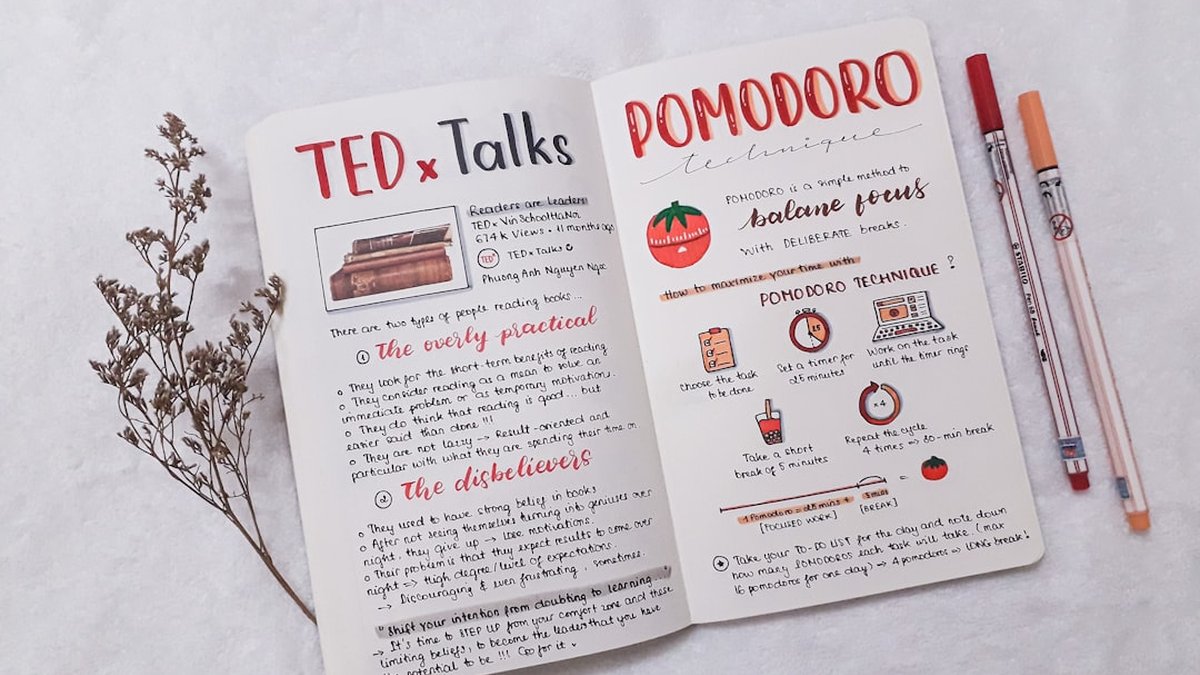
Simple guide to tiny study habits that pair with pomodoro
Tiny study habits are habit-stacking building blocks that aim for long-term behavior change. When combined with Pomodoro micro-habits, the result is both short-term reliability and long-term habit formation. The key is to keep each tiny habit so small it seems trivial, then stack it reliably at the start or end of a Pomodoro.
Examples of tiny study habits to pair with Pomodoro:
- immediate review: after every Pomodoro, read one flashcard for spaced repetition (30 seconds)
- note capture: add one bullet to a Cornell notes column for every Pomodoro completed (30–60 seconds)
- reflection loop: at day end, total Pomodoros and record a single learning insight (2 minutes)
- environment habit: always charge the phone outside the study space before starting a Pomodoro (15 seconds)
Micro-habit scripts (ready to use):
- 'Start ritual': "Timer 25, goal: one problem, three breaths, begin." (spoken)
- 'End ritual': "One line: progress, one next action; stand and stretch." (spoken)
These scripts reduce cognitive load by automating the decision sequence and producing predictable results that reinforce the habit loop.
Pomodoro vs tiny habits for students: when to use each and how they work together
This section compares the two approaches and recommends practical combinations.
- Focus: Pomodoro micro-habits optimize session execution and immediate performance. Tiny habits optimize long-term automaticity and identity change.
- Timescale: Pomodoro acts minute-to-minute; tiny habits act day-to-day and week-to-week.
- Best combined strategy: use Pomodoro micro-habits to produce consistent daily wins, then stack tiny habits to translate those wins into identity-level routines.
HTML table: quick comparison
| Feature |
Pomodoro micro-habits |
Tiny habits |
| Primary goal |
Immediate focus and session reliability |
Long-term behavior automation |
| Duration |
Seconds to minutes per ritual |
Daily repetition over weeks
|
| Best for |
Starting study quickly and staying on task |
Forming identities like 'I am a consistent learner' |
| Typical metrics |
Pomodoros completed, interruptions per session |
Days in a row, habit streak length |
How to fix focus lapses during pomodoro
Focus lapses are normal. The goal is not to eliminate every lapse but to shorten them and resume productive work quickly.
Fast fixes that fit inside a Pomodoro:
- 3-3-3 breathing: inhale 3s, hold 3s, exhale 3s, repeat twice (30 seconds). This reduces physiological arousal and resets attention.
- micro-environment check: remove one visible distraction (phone, open tab) immediately (10–30 seconds).
- reframe script: read the micro-goal aloud and convert it into one micro-step ("read one paragraph and annotate one sentence") (10–20 seconds).
- swap task technique: if stuck for more than 2 minutes, switch to a related simple task (summarize a paragraph) to re-establish forward motion.
If lapses persist across two Pomodoros, use a longer recovery: 10 minutes of physical movement plus a single reflection sentence on the cause.
Quick diagnostic flowchart
- lapse under 30 seconds → apply 3-3-3 breathing + reframe
- lapse 30–120 seconds → micro-environment check + swap task
- lapse >120 seconds or repeated across sessions → log context, adjust micro-goal complexity, apply longer recovery
Pomodoro micro-habit flow
Pomodoro micro-habit flow
📝
Prepare
Set micro-goal + materials
⏱️
Cue
Set timer + 3 breaths
⚡
Focus
Work 25 minutes with micro-checks
✅
Checkpoint
Log progress + plan next
Advantages, risks and common mistakes
Benefits / when to apply ✅
- Use Pomodoro micro-habits when starting sessions is the main obstacle, when attention fades after brief periods, or when studying requires repeated starts and stops.
- Particularly effective for deadline-driven study blocks and daily review sessions.
- Effective for students with variable schedules because rituals are short and portable.
Mistakes to avoid ⚠️
- Trying to automate large, unclear goals; micro-habits fail when the micro-goal is ambiguous.
- Overloading micro-habit checklist; keep rituals under 90 seconds.
- Ignoring data: track Pomodoros, interruptions, and perceived focus to iteratively improve.
Adaptation notes for ADHD and complex tasks
- Shorter intervals (10–15 minutes) often work better for ADHD; pair each mini-Pomodoro with an immediate reward micro-habit.
- For complex problem solving, use pre-session 'map the problem' micro-habit to create a one-step entry point.
Practical 14-day progression plan (example schedule)
- Days 1–3: 10 Pomodoros per day, focus on the prepare + cue + checkpoint micro-habits.
- Days 4–7: increase micro-check frequency and add one tiny habit: review one flashcard per Pomodoro end.
- Days 8–14: introduce a daily reflection habit and track metrics: pomodoros/day and perceived focus on a 1–5 scale.
Tracking template: day | pomodoros completed | interruptions | focus score | key insight
Semantic tips to integrate spaced repetition and active recall
- Use the end-of-Pomodoro checkpoint to create one or two flashcards for spaced repetition systems.
- For problem sets, use the final 3 minutes to close the loop: write the solution summary and one variational question for recall later.
Questions students often ask (faq)
What is the easiest micro-habit to start with?
The easiest micro-habit is preparing the workspace and writing a single micro-goal on a sticky note; it takes 30–60 seconds and removes start-up friction.
How long should a micro-habit be during a Pomodoro?
Micro-habits should be between 15 seconds and 90 seconds; anything longer reduces the speed advantage and increases friction.
Can Pomodoro micro-habits help with test cramming?
Yes; they stabilize short-term study by converting chaotic sessions into repeatable cycles, improving throughput and recall when paired with active recall.
What about distractions from technology?
Use a micro-habit of placing the phone out of reach or in another room and log any unavoidable notifications to review during the break.
How to measure progress with Pomodoro micro-habits?
Track pomodoros completed daily, interruptions per session, and a subjective focus score; review weekly trends and adjust micro-goal complexity.
Your next step:
- Start one Pomodoro with the prepare + cue + checkpoint micro-habits and log the result.
- Repeat the cycle for at least 4 Pomodoros today and record interruptions and focus score.
- Implement the 14-day progression plan above and compare week 1 vs week 2 metrics to iterate on micro-goals.
