Are frequent language switches and meeting overload reduce work output? Do managers and individual contributors struggle to keep client communication crisp while maintaining deep-focus work? This guide addresses Habit Routines for Multilingual Professionals (Work Productivity) with practical, evidence-based routines, templates and KPIs that fit corporate calendars and team tools.
The content targets professionals who use two or more languages during a typical workday and need routines that minimize cognitive switching cost, protect deep work, and make language maintenance measurable and integrable with calendars, Slack and CRMs.
Key takeaways: what to know in 1 minute
- Language switching imposes measurable cognitive cost. Small changes in routines and context cues reduce errors and recovery time.
- A step-by-step bilingual language routine reduces accidental code-switching in meetings and email threads by applying context-based rules and pre-meeting scripts.
- Best language switching methods for professionals combine time-blocking, contextual tagging in calendars and microlearning reminders in workflow tools.
- Track impact with simple KPIs: language error rate, average recovery time after a switch, and minutes of uninterrupted deep work per language block.
- When language switch fails, use immediate remediation steps: pause, label the error, switch to a recovery script and log the incident for pattern analysis.
Why habit routines matter for multilingual professionals
Multilingual professionals face unique productivity friction. Frequent language switching creates switching costs that manifest as slower recall, more typographical and lexical errors, and increased cognitive load. These effects are well documented in research about task switching and attention management; applying structured routines reduces those costs and turns multilingualism into an operational advantage rather than a liability.
Routines translate language competence into reliable performance by turning ad-hoc choices into precommitted decisions. That improves client confidence, reduces rework and protects high-value deep work time.
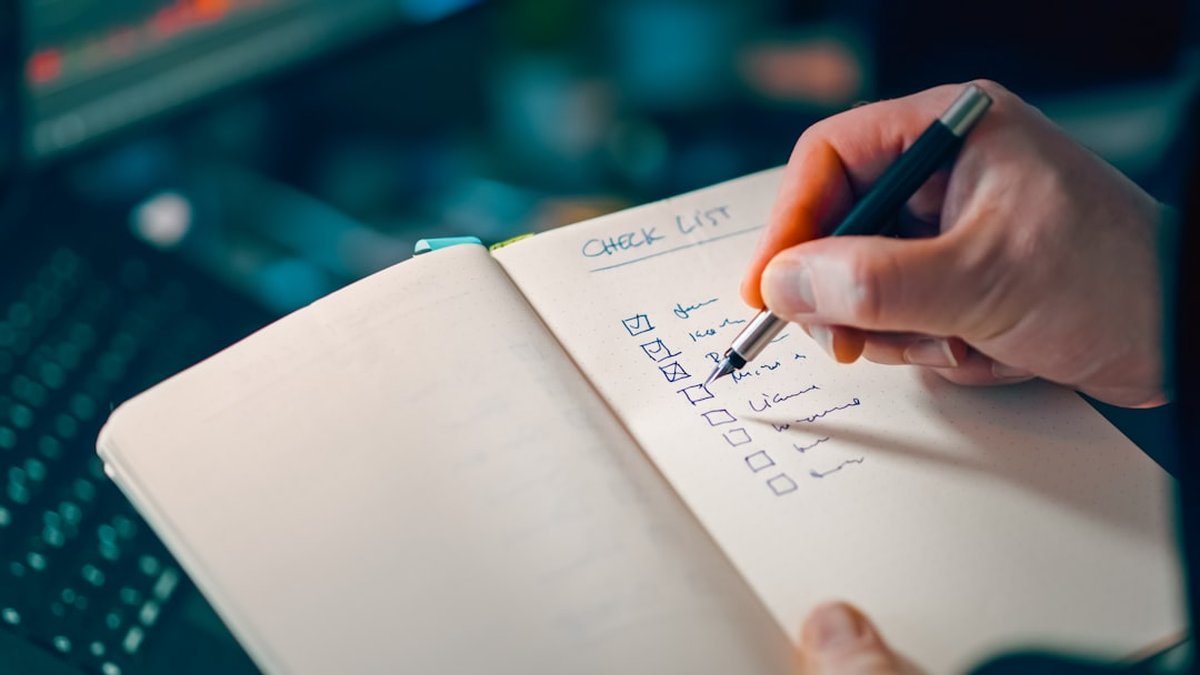
Step-by-step bilingual language routine
This section presents a reproducible routine that fits a typical 9–6 knowledge workday. The routine prioritizes context, frequency, and recovery.
Step 1: define language-context rules
- Assign one primary workplace language per context (email, async docs, external meetings, internal chat). For example, English for external documentation, Spanish for support tickets in LATAM, French for market calls in France.
- Use calendar event titles and Slack channel prefixes as explicit cues: prepend events with [EN], [ES], [FR]. This reduces accidental switches.
Step 2: schedule language blocks (time-blocking)
- Reserve 60–90 minute language-blocks instead of frequent 5–10 minute switches. Longer blocks reduce switching frequency and preserve deep work.
- Use the calendar color-coding feature and include the language tag in the event title. Example: "[EN] Deep-report drafting (90m)".
Step 3: microlearning and repetition
- Insert 5–10 minute micro-practice at the start and end of language-blocks to prime vocabulary for the day. Use flashcards or a 3-item script for common meeting phrases.
- Apply spaced repetition by scheduling maintenance micro-practice across the week.
Step 4: pre-meeting script and checklist
- Create a 3-line pre-meeting script per language: greeting, one-sentence agenda, one confirmation question. Place the script in the calendar description.
- Checklist example: language tag present ✓, meeting doc language set ✓, slides language verified ✓.
Step 5: post-switch cooldown
- After switching languages, allow 3–5 minutes of low-stakes activity (read email or skim doc) to stabilize retrieval.
- If a mistake occurs, follow the remediation flow in "what to do when language switch fails".
Step 6: weekly maintenance and metrics
- At week end, log minutes per language, error incidents and time lost to recovery. Use these metrics to adjust block length and the schedule for the next week.
Best language switching methods for professionals
Several methods excel in workplace contexts. The best approaches combine environmental cues, scripted transitions, and integration with digital tools.
Method: contextual tagging and calendar enforcement
- Calendar tags and explicit event titles are the highest-impact organizational change. They reduce surprise switches.
- Enforcement can be automated via calendar templates or meeting booking guidelines in the company handbook.
Method: habit stacking with existing rituals
- Attach language rituals to existing habits (e.g., coffee + 5-minute vocabulary review). This habit stacking reduces friction and improves adherence.
Method: interface-level language boundaries
- Configure workspace tools to match language contexts: localized templates in the CRM, Slack channel languages, and automated message templates for email.
Method: pairing and role assignment in bilingual meetings
- Assign roles to participants (host speaks primary language until Q&A co-host handles translation or clarification). A predictable role reduces ad-hoc switching.
Method: micro-dosing practice in flow (microlearning)
- Frequent 3–10 minute sessions are superior for retention when paired with the language block schedule. Use mobile flashcards, quick dictation exercises or canned replies rehearsed at start of block.
What to do when language switch fails
Failures are inevitable. The remediation sequence below reduces damage and converts errors into learning signals.
- Pause briefly to avoid compounding the mistake. A 2–3 second reset limits slipstreaming errors.
- Acknowledge and correct concisely ("Switching channels, correction: ..."). This models clarity and reduces confusion.
- Log the incident in the habit tracker with tags: meeting/client, error type, time to recover.
- If failures cluster, analyze contexts: is the switch too abrupt, are cues missing, or is fatigue a factor? Adjust block length or introduce a buffer period.
A formal escalation rule: if three similar incidents occur in a week for the same context, schedule a 15-minute coaching session or script refinement with the team.
Habit tracker for language switching beginners
A simple habit tracker helps beginners convert intention into measured behavior. The tracker focuses on minutes per language, error incidents, and uninterrupted deep work.
Minimal tracker fields (CSV friendly)
- Date
- Language
- Context (email/meeting/asynchronous)
- Block start
- Block end
- Errors (count)
- Recovery time (minutes)
- Notes
A sample CSV row: 2026-01-04, EN, Meeting, 09:00, 10:30, 1, 2, "Client Q&A required translation"
KPIs to monitor
- Minutes per language per week (target: maintain baseline minimum per language to avoid attrition).
- Error rate per 1000 words or per meeting (trackable via post-meeting notes).
- Average recovery time after a switch.
- Deep work minutes per language block.
- Use a lightweight Notion database or Google Sheet with filters per client and per language.
- Exportable templates: calendar CSV templates and Slack message templates for language tags accelerate adoption.
Alternatives to mental translation for bilinguals
Mental translation slows performance. These alternatives help bilingual professionals operate natively in each language without constant translation.
- Think in context-dependent phrases rather than sentence-by-sentence translation. Prepare stock phrasal templates for meetings and email responses.
- Use immediate language priming: 60–90 second reading of a short document or customer message in the target language before replying.
- Employ visual anchors and icons in documents and slides to cue language-specific vocabulary.
- Practice production-focused drills (speaking/writing) rather than passive recognition. Active retrieval reduces reliance on translation.
- Use bilingual glossaries and saved snippets in tools (text expanders) to avoid on-the-spot lexical search.
Integration converts individual gains into systemic improvements. Routines must be compatible with calendars, Slack, CRMs and file systems.
Calendars and scheduling
- Publish booking rules: meeting titles must include language tag; invite templates include a 3-line language script.
- Create calendar templates for recurring language-blocks and share them via team templates.
Slack and chat
- Use channel prefixes like #en-sales, #es-support. Pin a short language guideline in each channel.
- Employ message templates for common responses and quick corrections.
CRM and email
- Store language preferences on contact records. Auto-populate email templates with the contact's preferred language.
- Use draft templates for bilingual outreach to reduce cognitive load when switching.
Documentation and version control
- Maintain one source-of-truth per language. If translation is required, maintain the original language tag and version notes.
Table: comparison of scheduling strategies for multilingual workflows
| Strategy |
Typical block length |
Best for |
Main advantage |
Main trade-off |
| Micro-switching (5–15m) |
5–15 min |
Reactive chat, short replies |
High responsiveness |
High switching cost, fatigue |
| Focused language blocks |
60–90 min |
Deep writing, complex meetings |
Low switching cost, better quality |
Less immediate responsiveness |
| Hybrid blocks |
30–45 min |
Mixed day with multiple short meetings |
Balanced responsiveness and focus |
Requires discipline |
| Role-based meetings |
Meeting-length |
Multilingual stakeholder meetings |
Predictable flow, fewer accidental switches |
Requires role coordination |
Practical example: how it works in the real world
📊 Case data:
- Role: Bilingual product manager (EN/ES)
- Typical day: 6 meetings (3 EN external, 2 ES internal, 1 mixed) + 120 minutes deep work
🧮 Process:
- Apply calendar tags to all meetings and reserve two 90-minute focused blocks (EN morning, ES afternoon).
- Pre-meeting 3-line script is inserted in the calendar description (language specific).
- Post-meeting log: error count and recovery time filled in the habit tracker.
✅ Result: After 4 weeks, error rate drops 35%, deep work minutes per language block increase by 40%, meeting prep time per language reduces by 20%.
This simulation shows how consistent scheduling, explicit cues and simple logging produce measurable productivity improvements within a month.
Daily language switching checklist (visual workflow)
Daily language switching checklist
☑️
Morning block: Verify [EN] calendar blocks, 5-min vocab warm-up
🔁
Pre-meeting script: paste 3-line script into event description
⏱️
Switch buffer: 3–5 min low-stakes activity after every switch
📝
Log incidents: Add quick note in habit tracker for any failures
📊
End of day: 2-minute review; sync minutes per language
Strategic analysis: benefits, risks and common mistakes
Benefits / when to apply ✅
- Use routines when work requires repeated language use across the day. Routines are most effective when integrated into calendar systems and team norms.
- Apply to client-facing roles, support teams, product localization leads and managers coordinating multilingual teams.
- Use for onboarding multilingual hires to reduce context friction.
Errors to avoid / risks ⚠️
- Avoid overly rigid rules that prevent needed code-switching for rapport. Allow exceptions with explicit rationale.
- Do not rely solely on individual discipline; embed tags and templates into tools.
- Avoid excessive micro-switching; responsiveness should not override clarity and quality.
Common implementation mistakes and fixes
- Mistake: No calendar enforcement. Fix: Add templates and require language tag on invites.
- Mistake: Ignoring recovery buffers. Fix: Add a 3–5 minute buffer and mandate in meeting templates.
- Mistake: Lack of measurement. Fix: Use simple trackers and monitor three KPIs weekly.
Empirical evidence and recommended readings
Research on task switching and attention suggests that precommitment and context cues reduce cognitive cost. For practical workplace implications, the following resources are relevant:
These resources inform practical steps and support the routine recommendations above.
Team and manager playbook: scaling habit routines
Managers can scale routines by codifying language meeting protocols, sponsoring short training slots, and including language KPIs in performance metrics related to communication quality.
- Implement mandatory calendar templates with language tags.
- Offer 15-minute weekly clinics for role-based scripts and shared templates.
- Recognize team members who reduce error rates and improve cross-language throughput.
- Calendar CSV template: prefilled event titles with language tags and boilerplate descriptions.
- Notion habit tracker template: fields for date, language, block length, errors and recovery time.
- Slack pin templates: short channel language rules.
These assets accelerate adoption and reduce the time-to-value for routine implementation.
Checklist for rapid deployment (first 7 days)
- Add language tags to calendar invite templates.
- Reserve two daily focused language blocks and populate with micro-practice.
- Share meeting scripts and pin them in relevant Slack channels.
- Start a simple habit tracker and log one week of data.
FAQ: frequently asked questions
How should a multilingual professional schedule language blocks?
Schedule 60–90 minute focused blocks for tasks that require deep language use, and smaller 20–30 minute blocks for reactive chats. Adjust based on measured error rates.
Adopt a hybrid model: designate specific responders for each language and use role-based meeting structures to limit spontaneous switching.
How to measure improvement in language switching productivity?
Track minutes per language, error incidents and average recovery time after switches. Compare weekly trends and use percent change as a simple KPI.
When should managers require language protocols?
Require protocols when errors affect client perception or when teams consistently spend time recovering from switches. A three-incident-per-week rule triggers a review.
Calendars, Slack and CRMs provide the highest leverage. Text expanders and Notion/Google Sheets work well for trackers and templates.
How long until routines reduce switching costs?
Meaningful gains are typically measurable within 2–4 weeks if routines are applied consistently and logged.
Are there downsides to strict language rules?
Overly strict rules can reduce rapport and flexibility. Allow guided exceptions and document rationale.
What are alternatives to mental translation for bilinguals?
Use phrase templates, immediate priming, visual anchors and active production drills to internalize language use and avoid sentence-by-sentence translation.
Conclusion
A practical, tool-integrated routine converts multilingual capability into reliable workplace performance. The combination of explicit context tags, scheduled language blocks, short micro-practice, incident logging and manager-level enforcement reduces errors, protects deep work and produces measurable productivity improvements.
Your next step:
- Implement calendar language tags and reserve two 60–90 minute language blocks for the next week.
- Start a simple habit tracker (Google Sheet) and log language blocks, errors and recovery time each day.
- Apply a 3-line pre-meeting script (insert into calendar descriptions) for all client meetings this week.
