Are skinny, high-metabolism frames making gains feel impossible even when training hard? That frustration is common among ectomorphs who try traditional advice—eat more and lift heavy—only to find gains slow, inconsistent, or unsustainable. The challenge: higher resting energy expenditure, limited absolute strength, and often an initial lack of neuromuscular coordination for compound lifts.
Prepare for a focused, practical approach: Bodyweight Strength for Ectomorphs provides a complete pathway to muscle mass using progressive calisthenics, microloading techniques, nutrition strategies tuned to high metabolisms, and recovery protocols designed for growth. The plan emphasizes progressive overload without a gym, measurable progress tracking, and simple rules to avoid wasted effort.
Quick essentials for bodyweight strength for ectomorphs
- Understand the bottleneck: ectomorphs need sustained progressive overload plus a calorie surplus—bodyweight methods can deliver both with the right progressions.
- Start with a structured mass plan: 3–4 sessions weekly, push/pull/squat focus, progressive regressions and progressions for every movement.
- Use microloading strategies: tempo, reps to near-failure, added holds and bands are primary tools when external loads are limited.
- Nutrition and recovery drive results: a 10–20% calorie surplus, 1.6–2.2 g/kg protein, prioritized sleep and low unnecessary cardio accelerate hypertrophy.
- Track objective metrics: volume per movement, reps in reserve, and weekly strength markers; adjust when progress stalls.
Bodyweight mass plan for beginners
Explanation and context
A beginner-focused bodyweight mass plan for ectomorphs must balance manageable volume with high-quality progressive overload. Ectomorphs often respond poorly to excessive conditioning; training should be efficient, focused on compound bodyweight movements, and include progressive difficulty for the main motor patterns: push, pull, squat, hinge, and vertical press.
Core structure (why it matters)
- Frequency: 3 full-body sessions per week (e.g., Monday/Wednesday/Friday) for neurological adaptation and recovery control.
- Split rationale: full-body sessions concentrate volume on each major pattern multiple times weekly, which is beneficial for hypertrophy in novices and suits ectomorph recovery profiles.
- Session length: 40–60 minutes, allowing intensity and short rest intervals.
Sample 8-week beginner template
Week template
- Warm-up: 6–8 minutes dynamic (banded dislocations, hip hinges, scapular pulls).
- Main sets: 3–5 worksets per primary movement, 60–90 seconds rest. Aim for 6–12+ reps depending on progression difficulty.
- Accessory: 2–3 exercises targeting single-joint or weak links (triceps, biceps, calves, grip), 2–3 sets of 8–15.
- Conditioning: 5–8 minutes low-impact (walking or light sled-style pushing) 1–2 times weekly max.
Example session A (push emphasis)
- Push progression: Incline push-ups (progress to archer/decline), 4 sets
- Pull progression: Australian rows, 4 sets
- Lower body: Bulgarian split squats (bodyweight), 3 sets
- Accessory: Band triceps extensions, farmer carry (grip), 3 sets
Example session B (pull emphasis)
- Pull progression: Negative chin-ups or assisted chin-ups, 4 sets
- Push: Pike push-up progression, 3 sets
- Lower body: Deep bodyweight squat, slow eccentric, 3 sets
- Accessory: Rear delt face pulls (band), 3 sets
How to progress week to week
- Add reps or remove assistance each session when the top set reaches the prescribed rep target with 1–2 RIR (reps in reserve).
- When bodyweight limitations exist, add micro-variations: slower tempo, pausing, isometrics, or small external loads (backpack, plate) if available.
Common errors and consequences
- Mistaking high-repetition conditioning for hypertrophy work: excessive cardio reduces net calories and blunt growth.
- Ignoring progressive overload: repeating the same assist level indefinitely stalls gains.
- Overtraining volume too early: ectomorphs with limited recovery need conservative progressive increments.
When to move from beginner to intermediate
- Consistent weekly progression for 6–10 weeks and mastering foundational patterns (unassisted pull-up, decline push-up, single-leg squat) indicates readiness to scale intensity and volume.
Ectomorph muscle growth step by step
Clear explanation
Muscle growth for ectomorphs using bodyweight training follows the same physiological rules as traditional hypertrophy: mechanical tension, metabolic stress, and muscle damage combined with a positive energy balance and recovery. The difference lies in implementing progressive overload without heavy external loads.
Step-by-step roadmap (expert context)
- Establish baseline metrics: bodyweight, body-fat estimate, 1–3 rep max equivalents for bodyweight moves (e.g., max reps of incline push-up, chin-up negatives). Track weekly.
- Set a conservative caloric surplus: start +250 kcal/day above maintenance and monitor weight change 7–10 days; adjust to +300–500 kcal if no gain after two weeks.
- Prioritize compound progressions: push/pull/squat/hinge variations as primary drivers of mass.
- Apply progressive overload systematically: aim to increase weekly volume by ~5–10% per movement over 3–4 weeks, then deload or re-evaluate.
- Use microloading when bodyweight maxes are reached: tempo manipulations, partials, added isometric holds, band tension or small external loads.
- Cycle volume and intensity (periodize): 4 weeks build, 1 week deload or active recovery; repeat.
Practical implications
- Monitoring: use simple logs that record sets × reps × progression difficulty plus subjective recovery and sleep.
- Adjustment triggers: if no strength/volume improvement in 2–3 weeks, increase calories, reduce cardio, or switch microloading strategy.
Errors and when they matter
- Rapid calorie increases without monitoring cause fat gain; gradual surplus protects lean mass accrual.
- Using only high-rep light work produces endurance rather than hypertrophy-specific adaptations.
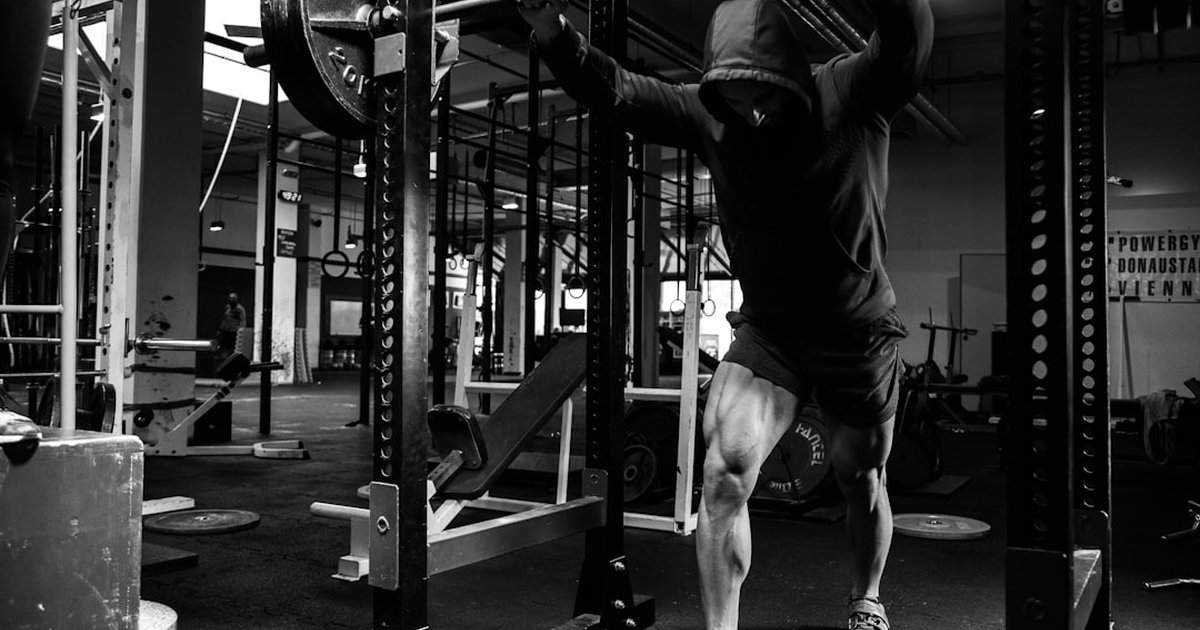
Simple ectomorph bodyweight hypertrophy guide
What to prioritize
- Mechanical tension: create it via harder leverage (decline push-ups, one-leg squats) and longer time under tension.
- Metabolic stress: use cluster sets, slow eccentrics, and isometric holds to increase blood flow and metabolic stimulus.
- Progressive complexity: regressions and regressions should be pre-planned so every movement has 4–6 stages.
Progression toolkit (microloading alternatives)
- Tempo: 4–1–2 (eccentric, pause, concentric) to increase time under tension.
- Pauses: 2–5 second pausing at hardest point increases load without external weight.
- Reps to near-failure: train sets near 1–2 RIR for hypertrophy.
- Band resistance/assistance: adjustable and highly effective for gradual tension.
- Isometrics: 10–30 second holds in midrange to stimulate growth without additional weight.
Practical advice for ectomorph-specific issues
- Thin wrists and weak forearms: include frequent grip work and progressive loaded carries (backpack) to improve transfer to pulling strength.
- Long levers: favor narrower range progressions initially to develop strength at joint angles before full-range advanced moves.
Consequences of poor application
- Overemphasis on technique perfection without progressive overload delays hypertrophy.
- Ignoring recovery or caloric intake leads to training-induced weight loss rather than growth.
Best bodyweight exercises for ectomorphs
Selection criteria
Exercises selected for ectomorphs should allow progressive loading, target large muscle groups, and enable measurable advancement. Preferred choices are those with clear regressions and progressions.
Primary exercises (and progressions)
- Push: incline push-up → standard push-up → decline push-up → archer push-up → one-arm push-up.
- Pull: Australian row → eccentric chin-up → assisted chin-up → full chin-up → weighted pull-up (if available).
- Legs: bodyweight squat → Bulgarian split squat → pistol squat regressions/progressions → loaded single-leg variations.
- Vertical press: pike push-up → elevated pike → wall-assisted handstand push-up → freestanding handstand press.
- Hinge/hip dominant: glute bridge → single-leg glute bridge → Nordic curl progressions (for hamstrings) with partner/band assistance.
Accessory moves
- Triceps: banded triceps extension, bench dips (control volume).
- Biceps: band curls, chin-up holds, slow eccentrics.
- Core: weighted-like plank progressions (single-arm/leg lifts, slow rollouts).
Programming tips
- Prioritize pull capacity: many ectomorphs lack pulling strength relative to pushing; correct imbalance to support posture and scalable progressions.
- Use unilateral work early for legs to trigger higher relative load per limb and faster hypertrophy.
Home bulking routine no equipment
Complete 6-week sample routine (progressive)
Week structure: 3 sessions per week (A/B/A, B/A/B alternate), cycle difficulty every 2 weeks by increasing set volume or advancing progressions.
Example week (no equipment)
Session A
- Incline push-ups 4 × 8–12 (progress toward decline)
- Australian rows 4 × 8–12 (progress toward low rings/body rows)
- Bulgarian split squats 3 × 8–12 each leg
- Glute bridges 3 × 12–15 (hold 2s at top)
- Plank variations 3 × 45–75s
Session B
- Eccentric chin-ups 4 × 5–8 (slow 4–6s descent)
- Pike push-ups 4 × 6–10
- Assisted pistol progressions 3 × 6–10 each leg
- Nordic curl negatives (band-assisted) 3 × 6–8
- Farmer carry with heavy backpack 3 × 40–60s
Progression rules
- Each week aim to increase reps or reduce assistance by one step for at least one movement.
- If all movements are stable, increase volume by adding 1 set per movement for the next two weeks, then re-evaluate.
Nutrition quick plan for bulking (no equipment training)
- Start surplus: +250–400 kcal/day based on activity. For ectomorphs, starting modest prevents excess fat. Monitor weekly weight and adjust.
- Protein: 1.6–2.2 g/kg bodyweight daily. Spread across meals.
- Carbs: prioritize around training (pre/post) for performance and recovery.
- Fats: keep moderate to support hormones (minimum ~20% of calories).
Practical meal examples
- Breakfast: oats, whole milk, peanut butter, whey protein.
- Lunch/dinner: rice/pasta, lean protein (chicken, tofu), olive oil, vegetables.
- Snacks: full-fat Greek yogurt, smoothies with banana, oats, nut butter.
Comparative view: bodyweight hypertrophy vs. traditional lifting
| Feature |
Bodyweight (calisthenics) |
Traditional weights |
| Progressive overload |
Requires creative microloading (tempo, holds, bands) |
Direct, linear loading with plates |
| Equipment need |
Minimal; scalable at home |
Requires gym or weights |
| Suitability for ectomorphs |
Highly suitable if progressions and nutrition implemented |
Also suitable and often faster to scale load |
[Visual process] 3-step progression for ectomorph bodyweight mass
Step 1 🟢 → Step 2 ⚡ → Step 3 ✅
- Step 1: Build technical foundation with regressions (4–6 weeks) → low injury risk and consistent strength gains.
- Step 2: Apply microloading (tempo, holds, bands) and small caloric surplus to trigger hypertrophy.
- Step 3: Consolidate gains via periodized cycles and consistent tracking; add minimal external load if plateau persists.
Progression ladder for bodyweight mass
Phase 1, Foundation (4–6 weeks)
Learn regressions, build neural efficiency, 3 sessions/week.
Phase 2, Load focus (4–8 weeks)
duce tempo, pause reps, increase weekly volume gradually.
Phase 3, Consolidation
Cycle intensities, reassess measurements, consider minimal external loading.
Balance strategic: what is gained and what is at risk with bodyweight strength for ectomorphs
When this is the best option ✅
- Access limitations make equipment impossible but time and consistency are available.
- Preference for functional strength and mobility alongside hypertrophy.
- Need for a low-cost, low-barrier path to build lean mass and strength.
Red flags to watch ⚠️
- Long-term plateaus if progressions are not properly planned and microloading is neglected.
- Insufficient calorie intake due to high non-exercise activity thermogenesis (NEAT) common in ectomorphs.
- Ignoring weak-link training (grip, posterior chain) which slows overall progress.
Lo que otros usuarios preguntan sobre bodyweight strength for ectomorphs
How long before an ectomorph sees visible muscle gains?
Visible changes often appear in 6–12 weeks with consistent progressive overload and a calorie surplus; initial strength gains may be faster while hypertrophy lags slightly behind. Monitor body composition, not just scale weight, to confirm lean mass increase.
How many calories should an ectomorph eat to bulk with bodyweight training?
Start with a conservative surplus of +250–400 kcal/day above estimated maintenance, adjust every 7–14 days based on weight trends; aim for ~0.25–0.5% bodyweight gain per week for leaner progress.
What if pull-ups stay stalled despite training?
Stalled pull-ups usually indicate insufficient specific volume or inadequate progression; increase eccentric reps, add frequent sub-max holds, and improve grip strength through loaded carries. Reduce nonessential conditioning that drains recovery.
Why are slow eccentrics effective for hypertrophy without weights?
Slow eccentrics increase time under tension and cause greater muscle fiber recruitment and metabolic stress, providing progressive overload when concentric output is limited by bodyweight.
Which is better for ectomorphs: higher reps or heavier tension?
Heavier tension (harder progressions) is generally superior, but mixing rep ranges (6–20) and tempos yields broad stimulus; maintain a focus on near-failure sets for hypertrophy.
How often should recovery days include active mobility?
Light mobility or low-impact aerobic work 1–2 times weekly supports recovery without compromising caloric surplus; avoid high-volume cardio that competes with growth.
What happens if an ectomorph increases calories but stops training progression?
A calorie surplus without progressive stimulus typically increases fat mass; consistent loading signals are required to convert surplus into muscle.
Final steps: build momentum and next moves
Consistent, targeted bodyweight training paired with a modest caloric surplus can produce substantial muscle growth for ectomorphs. The keys: measurable progressive overload, microloading creativity, and recovery discipline. Over time, gains compound; small weekly improvements in load, reps, or time under tension lead to meaningful changes in body composition.
Start building mass today
- Weigh and log current bodyweight, do a 7-day food diary, and set a +250 kcal/day surplus. (5–10 minutes.)
- Choose three foundational regressions (push, pull, squat) and perform one low-volume practice session focusing on perfect technique and tempo. (10 minutes.)
- Create a single-line tracking note: date, exercise, sets × reps, progression level. Update after every session and review weekly. (5 minutes.)
